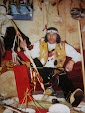
To The NORTH the unity of our people's survival, the spirit of the CREATOR, gave the great white bear spiritual strength to open the door to keep us warm, and gave us shelter beneath his shield., the spiritual strength of our people for thousands of years.
We were nomadic people and traveled the north winds to give us a sense of directions, not to cross the same path twice.
If one was weak then the north was a quest from the Creator, to keep us wise and learn the footsteps of our forefathers.
The spirit of the white bear is to teach us unity among other people and teach us to share . Most of our people have to stand for the next seven generations .
But, always go through with peace and friendship ,
But, we the first people's of this land(WABANAKI) People of the Dawn, are still here , and as the north star shines at the fading of the sunset, we come as Nation to Nation with one hand, with no shame.
Pikto'l Sa'ke'j Muise
(Ancient Spirit of the the White wolf.)
About Me
Tuesday, 28 May 2013

THE HISTORY OF THE NEWFOUNDLAND MI'KMAQ
The History of the Newfoundland Mi'kmaq
In what is now Nova Scotia, Prince Edward Island, a part of the Gaspé Peninsula and eastern New Brunswick, the Aboriginal people who greeted the first European visitors to their coasts were the Mi'kmaq (Micmac). Human occupation of this region extends back to more than 10,000 years ago, during which time its Native inhabitants adjusted to dramatic climatic change, significant technological development, and the arrival of new groups from the south. None of these things, however, would have as great an effect upon Aboriginal people as the coming of strangers from Europe. In the century after John Cabot's 1497 voyage to the Gulf of St. Lawrence, the Mi'kmaq would trade furs for copper kettles, woolen blankets, iron knives, and the other products of early modern Europe, as well as shallops (small sailing vessels) to carry the new goods to other Native peoples throughout the Gulf and as far south as New England. During this period, if not earlier, the Mi'kmaq reached the island of Newfoundland.
Scattered references in English and French historical records suggest that during the 17th century (1600-1700), Mi'kmaq families hunted, fished, and trapped from Newfoundland's southwest coast to Placentia Bay. Travelling back and forth between Cape Breton and Newfoundland, these Mi'kmaq incorporated the island of Newfoundland into what one researcher has aptly called a "domain of islands" (Martijn 1989).
The question of the nature of Mi'kmaq relations with the French, with the English, and with the Beothuks is a contentious one. The French, who long fished off Newfoundland's coasts, were sporadically at war with the English from the end of the 17th century to the beginning of the 19th century, and it has been argued that French authorities brought the Mi'kmaq over from Cape Breton as allies in the war with England. This is clearly not the case. The Mi'kmaq who came to Newfoundland did so of their own accord, and only after their arrival on the island did the French ask for their assistance. Not surprisingly, Mi'kmaqs had fought for years against English settlers in New England.
It has also been alleged that the French paid a bounty to the Mi'kmaq to collect Beothuk heads. This charge also does not hold up under close examination. French records reveal no indication of such a bounty; rather, it is probable that as the Mi'kmaq presence on the island increased, the Beothuks, as they did with European settlers, avoided the Mi'kmaq. (In this regard it should also be noted that Mi'kmaq oral tradition includes examples of friendly relations with the Beothuks, including the belief that the Mi'kmaq provided a haven for refugee Beothuks.)
The question of the nature of Mi'kmaq occupancy of Newfoundland during the 17th and early 18th centuries is another controversial question. Mi'kmaq oral tradition holds that the Mi'kmaq have continuously occupied the island since prehistoric times and that this original population was later joined by a group from Cape Breton. Other authorities argue that Mi'kmaq occupation of the island was not permanent until the 1760s (Bartels and Janzen 1990). These authors contend that, while Mi'kmaq from Cape Breton hunted, fished and trapped in Newfoundland on a seasonal basis from a very early date, during the 1760s, the "insensitivity and indifference" of the British, combined with their "resistance to Mi'kmaq demands that a Roman Catholic priest be appointed to serve their spiritual needs" were the most powerful factors influencing a group of Cape Breton Mi'kmaq, led by Chief Jeannot Pequidalouet, to take up permanent residence in Newfoundland (ibid., 86). Martijn (1989), however, cautions that we are imposing our own ideas of how and where people lived centuries ago when we employ terms such as the "Cape Breton Mi'kmaq" or "Newfoundland Mi'kmaq" for early historic Native people. Rather, Martijn argues, the period was a time when a group of Mi'kmaq sometimes lived and hunted in what we now call Cape Breton and sometimes that same group exploited the resources of what we now call Newfoundland. Both islands, in other words, were part of the group's traditional territory. Indeed, given the movement back and forth between these two islands until the beginning of the 20th century, perhaps this is the best way to think of the ancestors of today's Newfoundland Mi'kmaq.
For Mi'kmaq everywhere, however, the defeat of the French by the British, and the loss, in 1763, of all French territory in North America (except for the islands of St. Pierre and Miquelon off Newfoundland's south coast) were traumatic experiences. When there were two imperial powers fighting for control of the continent, the Mi'kmaq were valued--and subsidized--as military allies of the French. With the loss of those subsidies and the decline of the fur trade in the northeast, the Mi'kmaq of the Atlantic region faced a grim future. That was particularly true in the Maritime provinces where British settlers occupied the lands and waters which had once been Mi'kmaq. For those Mi'kmaq living in Newfoundland, however, the late 18th century and much of the 19th century was a kind of "Indian summer", a period when the Newfoundland Mi'kmaq were able to hunt, fish, and trap in the interior of Newfoundland--a region then relatively unknown by Newfoundlanders of European ancestry.
Mi'kmaq Camp, Sydney, N.S., 1857.
Mi'kmaq families were still travelling back and forth between Cape Breton and Newfoundland in the middle of the 19th century.
"Micmac camp. Sydney, Cape Breton Island, Nova Scotia" photographed by Paul-Émile Miot in 1857. Courtesy of the National Archives of Canada/coll 1995-084/PA-194632.
(29 kb)
With the demise of the Beothuks in the early 19th century, Mi'kmaq trappers and hunters expanded their range from the southern region of the island to include much of the interior of the main portion of the island. Mi'kmaq camps were to be found in St. George's Bay and the Codroy River in the southwest, White Bear Bay and Bay d'Espoir on the island's south coast, and Bonavista Bay, Gander Bay, and the Bay of Exploits in the northeast. In 1857, Newfoundland census takers recorded Mi'kmaq families in St. George's Bay, Codroy River, Grandy's Brook (on the south coast), Conne River, Bay d'Espoir, and in the Bay of Exploits.
At the beginning of the 19th century, a British naval officer indicated a Mi'kmaq village of about 100 people in Bay St. George, and by the 1830s, Newfoundland missionaries were referring to a Mi'kmaq village in Conne River of about the same size. It is possible that the number of Mi'kmaq living in Newfoundland at any one time in the 19th century was about 150 to 200 people, but population figures for Native people in this era must be regarded with caution. It is not at all clear that European observers took into account the fact that families moved seasonally between home villages, hunting territories, fish camps, and traplines. Census-takers, too, were not always reliable, nor is it likely that they could always win the trust of Native informants.
Newfoundland Mi'kmaqs ranged throughout the interior of the island, trapping beaver, otter, fox, lynx and muskrat which they exchanged for guns, knives, flour, tobacco, and other things which they could not make. Although families laid claim to specific trapping territories, hunting for meat, especially caribou (an essential part of Mi'kmaq diet), was open to all.
Although the major portion of the Mi'kmaq food supply consisted of the fish and game of the country, and the bulk of the people's income came from trapping, other activities were also important. For example, the Mi'kmaq's intimate knowledge of the interior meant that they were in great demand as guides for explorers and sportsmen. William Cormack's 1822 expedition across Newfoundland to search for the remnants of the Beothuks has been lauded as the first traverse of the island by a white man, but it could not have been done without his guide, a Mi'kmaq named Sylvester Joe. Significantly, the two encountered Indians in the interior several times during their journey. After Cormack, missionaries such as Edward Wix, geologists such as J.B. Jukes, Alexander Murray and James P. Howley, and sportsmen and naturalists like the noted J.G. Millais, all relied upon Mi'kmaq guides.
Joe Jeddore, a Mi'kmaq guide.
From J. G. Millais, Newfoundland and its Untrodden Ways (London: Longmans, Green, 1907) facing 202.
(28 kb)
Mi'kmaq knowledge of the country served them in other ways, as well. In the 1850s the colonial government hired Mi'kmaq guides to survey a route for a telegraph line which was to run the length of the island from St. John's to Port aux Basques. After the line was completed in 1856, Mi'kmaqs were retained as repairmen. Because Newfoundland's ice-bound northern coasts prevented delivery of the mail in winter, the government decided in the 1860s to hire Mi'kmaq men to deliver the mail overland through a network of trails reaching the northern communities. In the 19th century the interior of the island was essentially a Mi'kmaq preserve and nothing illustrates this better than the decision by governments, geologists and sportsmen to rely on Mi'kmaqs to lead them through unfamiliar territory.
That situation, however, would change with a growing population of European descent and with greater intrusion by this larger society into the interior. Perhaps the greatest threat to the Mi'kmaq way of life was the completion of a railway across the island in 1898. Now, for the first time, it was possible for large numbers of settlers and sportsmen to have quick access to the huge interior caribou herds. By all accounts the slaughter was appalling. Population figures for the caribou stocks can only be approximations, but it is estimated that the herds fell from 200,000-300,000 in 1900 to near extinction by 1930. The effect on the Mi'kmaq was catastrophic. Caribou meat had always been a mainstay of the Mi'kmaq diet, and with the decline of the herds it became much more difficult for families to live in the interior and to follow traplines. As a result, the 20th century brought new challenges and new hardships for the island's Native people.
By the beginning of this century, the woods and barrens of the interior were becoming more crowded. Where once only Mi'kmaq had travelled, now there were settlers hunting, trapping, and fishing for salmon, and sportsmen and market hunters taking an increasing toll of the declining caribou herds. In 1905, the Newfoundland government gave the Anglo-Newfoundland Development Corporation a huge amount of land in the interior and a site on the Exploits River (Grand Falls) where the company built a large, modern mill. Logging crews not only cut over the country, they also accelerated the destruction of the caribou by killing them for meat.
Reuben Lewis, a Mi'kmaq leader in the early 20th century, with Souliann and Ben Stride.
From J. G. Millais, Newfoundland and its Untrodden Ways (London: Longmans, Green, 1907) facing 213.
(26 kb)
Mi'kmaq culture as well as their economy came under attack in the first half of the 20th century. The Mi'kmaq had been Roman Catholics since the end of the 17th century and Newfoundland's Mi'kmaq had maintained their ties with the church through visits to French priests in St. Pierre, off Newfoundland's south coast, and to Cape Breton, especially for the July 26th feast of St. Anne. It is probable that as long as contacts between the church and the Mi'kmaq were brief and seasonal, the impact upon day-to-day life would not be traumatic. Things would change, however, with the arrival in the early 20th century of a priest at St. Alban's, near Conne River. His attempts to eradicate "pagan" beliefs and practises, his high-handed dismissal of a Conne River leader, and his attempts to ban the use of Mi'kmaq created a resentment that persists in the community today.
Perhaps even more destructive to the Mi'kmaq way of life, however, was the decline of the world market for furs. A downward spiral of fur prices began in the 1920s and accelerated in the world depression of the 1930s. Although some Mi'kmaq were able to find work as loggers in the 1930s, the period was one of real hardship for most. World War II, however, brought a measure of improvement for some Mi'kmaq, as it did for many other Newfoundlanders. Some men joined the Newfoundland Overseas Forestry Unit as loggers, while others took jobs with the Bowater's pulpwood operations working in the Conne River area.
Nonetheless, in the 1950s and 1960s the living standard of Conne River appears to have fallen below that of their neighbours. While no one actually starved, in 1958, as one authority noted, "only 30 per cent [of Conne River's people] were functionally literate" (Jackson 1993:168). Newfoundland's Mi'kmaq received no federal benefits during this period because, when Newfoundland joined Canada in 1949, the Mi'kmaq were not recognized as "status" Indians. In the 1960s and 1970s, however, Newfoundland Mi'kmaq were a part of a general movement by Aboriginal peoples throughout North America to reclaim their rights as First Nations. This might have been expected since the Newfoundland Mi'kmaq were experiencing some of the same difficulties encountered by Native people elsewhere. For example, older Mi'kmaq today from the west coast recount how their neighbours stigmatized them as "Jackatars", and how some people hid their Native ancestry for fear of ridicule. In Conne River, the flooding resulting from the massive Bay d'Espoir hydroelectric project and the construction of new roads to the south coast further depleted the caribou hunting and fur trapping of the region. Partly in response to these factors, the people of Conne River elected a chief and band council in 1972; a year later Mi'kmaq from the entire province came together in an organization called The Federation of Newfoundland Indians, the purpose of which was to achieve recognition by the Federal government. In the 1970s, the Innu and Inuit split from the Federation to form their own organizations. While the Conne River community achieved federal status under the Indian Act in 1984, the quest for federal recognition for Mi'kmaq outside Conne River continues.
© 1998, Ralph T. Pastore
Archaeology Unit & History Department
Memorial University of Newfoundland
THE SACRED PLANTS
The Origin of sacred Plants
As the four sons of the FIRST PEOPLE wandered to each of the directions, they were each given teachings and gifts.
The Darkness or the NORTH of sweetgrass and explained the "SWEETGRASS" is braided like hair because it is hair of Mother Earth and the first plant to grow upon her.
The smoke of the sweetgrass will keep evil ways from your home and will keep you safe on your travels.
The Doorkeeper of the EAST, the source of all knowledge, gave another son the Gift, "TOBACCO". It is put in a sacred fire. It made thoughts visible and carries them to the Spirit World.
The THIRD son visited the land of birth and growth in the SOUTH as the Doorkeeper placed a hand full of HERBS into the fire he said this is "CEDAR", used to purify your body from disease and protest you from harm.
The FOURTH son crossed great mountains to reach the WEST. There he gave "SAGE" to purify people and their surroundings and help maintain good HEALTH.
(Healer and patient must find each other/between a mountain and a mouse)
Pikto'l Sa'ke'j Muise..VJM
FLAT BAY BROOK...LEGEND OF A RIVER BOAT
Flat Bay Brook ....Legend of a River Boat. (Around 1969)
I was a young guy full of energy.I spent a great deal of my time travelling the country side, fishing , hunting with my uncle who taught me a great many teachings to survive in this great country of western NL.
In those days a boat was one of the tools to use is that survival.My uncle had a log cabin about 7 kilometers in on Flat Brook Brook road. Our boat was called Metrle. We used it to cross the river to check our trap line, used it to gather wood, and for fishing, bobbing eels and picking berries along the river banks.
We had the boat for a few years. One fall , about this time of year , we put Metrle on dry dock for the winter. Next spring after we went to his cabin the boat was gone.When the river raftered out that spring it took our boat on a clamper of ice.We never heard any thing after that about our boat.
Now we were lost and could do very little those days without a boat.
We did get another boat.
Some twenty years later I was doing a bit of prospecting for different minerals and decided one day to go down the river, I prospected about five kilometers and stated to get a bit tired, so I dicided to leave the river and walk up a bank which brought me to a cabin.
On the top of the bank I could see this old boat but filled with flowers. I looked toward the cabin and saw a women and she said hello to me.She asked me how I was doing and I told here why I was there , doing some prospecting , but desided to walk back on the road side.
She asked whether I wanted a cup of tea? I quickly said "Yes".
So we sat down sipping tea and I said "You have beautiful flowers planted in the old boat."
"My dear." she said " since my huspand and I bought this canp we have come here every spring and plant a gardoen in our boat. We fished the boat off the beach some twenty year ago. It came from up river but no one claimed the boat so we kept it.."
"Young fellow, this helped my husband and me to be together today.It's our secret place to restore our love for one another.I don't know what we'll do without the boat.There is only stone here and we have to carry ground to have such a nice flower pot."
In my mind I knew it was Metrle, but I never said a word.
I thanked her for the tea and left walking back to my uncle's camp and thinking about all those years spent wondering where the boat was.
Three or four years later my baby sister, Gertie Mai Muise , bought the cabin and I told here the story, and she gave me the boat.
After all the years it was a big loss to my uncle and me, but it helped two other humans share their love together.
So if you loose anything special while your passing down here, it not realy a lost. It may be useful to some one else.
VJM/Sake


Monday, 27 May 2013
The LEGEND
Ki'kmaq Legend
Kwe!
Long before any existence in life, before the eagles showed in the sky, there was a man.... wise with wisdom that came with all the ancient teaching's of his people known as Mi'kmaq.
He lived in a cave and was washed out by the tides and opened his eyes and all his five senses came to him. He decided to call the place, the land off turtle Island.
So as the sun rose and with a flash of light from the sun he looked around and said "This is a sacred place for his people to have freedom, with pride and dignity to be the first people of this land."
As he walked to the beach he saw seven turtles and touched one turtle's back and saw eleven stripes on the turtle's back.The wise man know the turtle was 365 years old, People started to form around him and trickles went downed his back and he started to play wisely with his flute.
He could feel worthy and stood up and smiled.
Now that he rested in the cave for so long the wise man looked at the harmony of the Mi'kmaq people and said "What a beautiful creation."
He knew the age of the turtle and that he was so wise and knew the Elements of WATER, AIR, and FIRE..
Then the four winds emerged in his thoughts. He was getting tired again and had to do something.
While at the sea seven turtles lay on the beach and along side there was a man laying in the sand, with the great tides rushing in. The wise man helped him up and the wise man said "I will call you Goose Cap and I will teach you the ancient teachings of my people , the Mi'kmaq."
While he lay there the wise man said "Your body was laying there for some time."
"Your head was to the EAST, your legs to the WEST, your arms, one pointing to the NORTH and one to the SOUTH. Your back was facing the sacred Mother Earth and your face in the direction of the universe."
That is the seven sacred directions. I have found what i was looking for sinse ancient time.
Then the wise man , after fishing the man, Goose Cap, out of the seas, fed him with fruit from the sea and gave him special spiritual strength to share among the newly created land of Turtle Island and taught his people to survive and the ways of life.
So the wise man spent days, months and years teaching Goose Cap all the seven sacred plants , all seven stages in life and all there was to know about survival.
Then they sat down and taught him the seven rites of the sacred pipe. Then he called to a women to light the sacred sweetgrass and sumage to cleanse then both. They smoked the sacred pipe and the wise man told Goose Cap,
"Within this cycle of truth in the circle of life there are Values, Customs and Traditions I have thought you from the GREAT SPIRIT. You will now go teach the first people of this land Turtle Island .This is known as oral traditions. You must now , as we received all this creation for nothing, teach the knowledge and wisdom to the Mi'kmaq people. "
"The tides are low now and the sun is setting. I must go and rest. You go now .I have created you and respected you and I give you life and the gift of spiritual strength from the CREATOR, this Eagle feather in your honour.
Go among the First Nation People and teach.
Composed December 21/2012 By Pikto'l Sa'ke'j Muise/VJM.
VJMMi'kmaq
.
Subscribe to:
Posts (Atom)